

Biomedical Equipment Technology
Overview
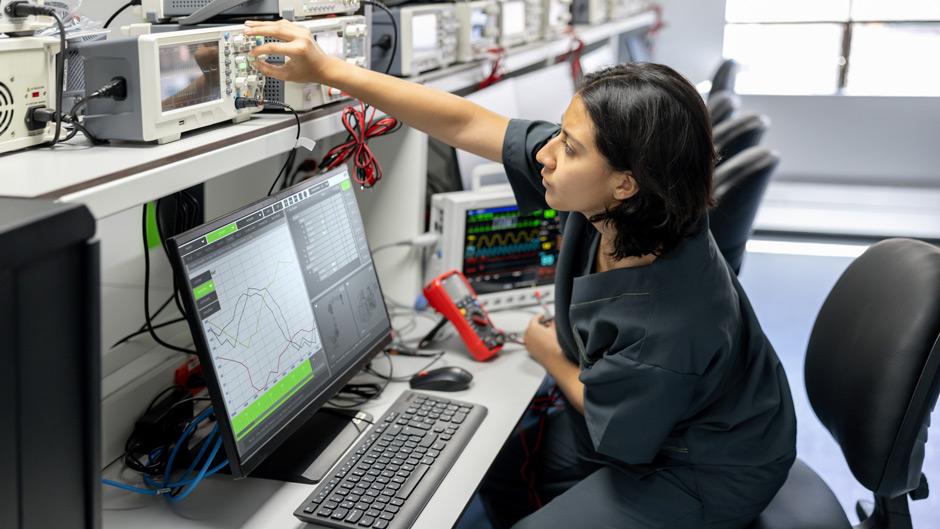
The Biomedical Equipment Technology program prepares students for careers as biomedical equipment technicians (BMETs). The curriculum focuses on the theory, operation, maintenance, troubleshooting, and certification of essential medical devices used in hospitals and clinics, such as ultrasound machines, respiratory therapy ventilators, and X-ray imaging systems. Students can pursue either an Associate of Science (AS) degree or a Certificate of Achievement, both of which provide hands-on experience and technical instruction in semiconductor technology, medical networking, and industrial communication. Graduates are equipped for entry-level roles maintaining complex diagnostic and life-support equipment, a field projected to see steady job growth in the Sacramento region.
Roadmaps
A.A./A.S. Degrees
- Dean Gary Aguilar
- Department Chair Jordan Meyer
- HomeBase Manufacturing, Construction, and Transportation HomeBase
- Phone (916) 484-8588
- Email askhb-mct@arc.losrios.edu
Associate Degree
A.S. in Biomedical Equipment Technology
This degree covers the theory, operation, maintenance, troubleshooting, and certification of biomedical equipment used in hospitals, medical device manufacturers, or other service organizations. It includes an in-depth study of frequently used medical equipment.
Catalog Date: August 1, 2026
Degree Requirements
| Course Code | Course Title | Units |
|---|---|---|
| First Semester: | ||
| ET 302 | Principles of Electricity and Electronics | 4 |
| Second Semester (Fall Semester Only): | ||
| BMET 425 | Introduction to Biomedical Equipment Technology | 4 |
| Second or Other Semesters: | ||
| ET 253 | Industrial Communication Systems Support | 4 |
| ET 322 | Semiconductors and Nanotechnology | 4 |
| ET 335 | Integrated Circuits with Computer Applications | 4 |
| ET 380 | Introduction to Electronic Communications | 4 |
| ET 420 | Microcontrollers and Digital Signal Processors | 4 |
| Third Semester (Spring Semester Only): | ||
| BMET 426 | Advanced Biomedical Equipment Technology | 4 |
| Third or Other Semesters: | ||
| A minimum of 2 units from the following: | 2 | |
| BMET 260 | Introduction to Medical Ultrasound Equipment (0.5) | |
| BMET 261 | Introduction to Biomedical Equipment Networking (1) | |
| BMET 262 | Introduction to Respiratory Therapy Ventilators (0.5) | |
| BMET 263 | Introduction to Medical X-ray Imaging Equipment (1) | |
| Total Units: | 34 | |
The Biomedical Equipment Technology Associate in Science (A.S.) degree may be obtained by completion of the required program, and either (a) the Local General Education Pattern or (b) the California General Education Transfer Curriculum (Cal-GETC), plus sufficient electives for a total of at least 60 units. See ARC graduation requirements.
Student Learning Outcomes
Upon completion of this program, the student will be able to:
- evaluate the data from basic preventive maintenance tests on the following equipment: multi-parameter physiological monitor, electrocardiogram (ECG) machine, blood pressure monitor, defibrillator, pulse oximeter, infusion pump, and electrosurgical unit.
- distinguish and list various medical imaging technologies.
- set up standard electrical measurement tools and differentiate the uses for calibration and troubleshooting of medical equipment.
- set up the following equipment: multi-parameter physiological monitor, ECG machine, blood pressure monitor, defibrillator, pulse oximeter, infusion pump, and electrosurgical unit.
- categorize biopotentials and electrodes as they relate to basic human anatomy and physiology systems.
- associate the applicable regulation with the regulating organizations.
- list and compare the different types of bioelectric amplifiers, signal processing circuits, and isolation circuits.
- compare and contrast the protocols for working in the operating room and special care units in the hospital.
Certificate of Achievement
Biomedical Equipment Technology Certificate
This certificate covers the theory, operation, maintenance, troubleshooting, and certification of biomedical equipment used in hospitals, medical device manufacturers, or other service organizations. It includes an in-depth study of frequently used medical equipment.
Catalog Date: August 1, 2026
Certificate Requirements
| Course Code | Course Title | Units |
|---|---|---|
| BMET 261 | Introduction to Biomedical Equipment Networking | 1 |
| ET 302 | Principles of Electricity and Electronics | 4 |
| ET 312 | Mathematics for Circuit Analysis | 3 |
| ET 322 | Semiconductors and Nanotechnology (4) | 4 |
| or ET 335 | Integrated Circuits with Computer Applications (4) | |
| or ET 380 | Introduction to Electronic Communications (4) | |
| BMET 425 | Introduction to Biomedical Equipment Technology | 4 |
| BMET 426 | Advanced Biomedical Equipment Technology | 4 |
| A minimum of 1 unit from the following: | 1 | |
| BMET 260 | Introduction to Medical Ultrasound Equipment (0.5) | |
| BMET 262 | Introduction to Respiratory Therapy Ventilators (0.5) | |
| BMET 263 | Introduction to Medical X-ray Imaging Equipment (1) | |
| ET 298 | Work Experience in Electronics Technology (0.5 - 4) | |
| Total Units: | 21 | |
Student Learning Outcomes
Upon completion of this program, the student will be able to:
- evaluate the data from basic preventive maintenance tests on the following equipment: multi-parameter physiological monitor, electrocardiogram (ECG) machine, blood pressure monitor, defibrillator, pulse oximeter, infusion pump, and electrosurgical unit.
- distinguish and list various medical imaging technologies.
- set up standard electrical measurement tools and differentiate the uses for calibration and troubleshooting of medical equipment.
- set up the following equipment: multi-parameter physiological monitor, ECG machine, blood pressure monitor, defibrillator, pulse oximeter, infusion pump, and electrosurgical unit.
- categorize biopotentials and electrodes as they relate to basic human anatomy and physiology systems.
- associate the applicable regulation with the regulating organizations.
- list and compare the different types of bioelectric amplifiers, signal processing circuits, and isolation circuits.
- compare and contrast the protocols for working in the operating room and special care units in the hospital.
Career Information
This program prepares electronics technology students for a biomedical technician internship or trainee position.
Biomedical Equipment Technology (BMET) Courses
BMET 260 Introduction to Medical Ultrasound Equipment
- Units:0.5
- Hours:9 hours LEC
- Prerequisite:None.
- Corequisite:BMET 425
- Catalog Date:August 1, 2026
This course provides in-depth training for maintaining ultrasound equipment used in the biomedical field. It covers imaging modes, physical principles, transducers, system block diagrams, common peripherals, Doppler effect, image quality, test equipment, and troubleshooting. This course was formerly known as ET 260 and is not open to students who have successfully completed that course.
Student Learning Outcomes
Upon completion of this course, the student will be able to:
- compare ultrasound transducers that convert physiological properties to electrical signals.
- describe standard electrical measurement tools and differentiate the uses for calibration and troubleshooting of ultrasound equipment.
- diagnose typical failures of transducers from displayed waveforms.
- compare standard and Doppler ultrasound technologies.
- create a block diagram and list the different components, transducers, signal processing circuits, and displays used in ultrasound equipment.
BMET 261 Introduction to Biomedical Equipment Networking
- Units:1
- Hours:18 hours LEC
- Prerequisite:None.
- Advisory:ET 253 and 302
- Catalog Date:August 1, 2026
This course provides an overview of IT networking for biomedical devices. Topics include basic IT networking, network architectures for connecting medical devices, cybersecurity, medical device-related networking standards (e.g., HL-7, DICOM, FHIR), tools for testing and troubleshooting, and other related topics (e.g., working with your IT department). This course was formerly known as ET 261 and is not open to students who have successfully completed that course.
Student Learning Outcomes
Upon completion of this course, the student will be able to:
- compare Digital Imaging and Communications in Medicine (DICOM) networking protocols.
- describe standard and specialized electrical measurement tools for the testing and troubleshooting of medical networks.
- diagram a typical medical equipment network.
- create a network interface cabling diagram including color codes and connector types.
- list typical software commands and tools for communication troubleshooting.
- describe security requirements to protect networks and patient confidentiality.
BMET 262 Introduction to Respiratory Therapy Ventilators
- Units:0.5
- Hours:9 hours LEC
- Prerequisite:None.
- Corequisite:BMET 425
- Catalog Date:August 1, 2026
This course provides in-depth training for the maintenance of respiratory ventilation machines used in the biomedical field. It covers respiratory ventilator basics, ventilator block diagrams, patient circuits, test equipment, and troubleshooting. This course was formerly known as ET 262 and is not open to students who have successfully completed that course.
Student Learning Outcomes
Upon completion of this course, the student will be able to:
- diagram the patient circuit for a respiratory ventilator.
- describe the use of standard electrical measurement tools.
- differentiate the uses of electronic instruments for calibration and troubleshooting of respiratory ventilator equipment.
- diagnose typical failures of respiratory ventilators.
- create a block diagram and list the different components, transducers, signal processing circuits, and displays used in respiratory ventilation equipment.
BMET 263 Introduction to Medical X-ray Imaging Equipment
- Units:1
- Hours:18 hours LEC
- Prerequisite:BMET 425 with a grade of "C" or better
- Catalog Date:August 1, 2026
This course provides an introduction to the maintenance of medical X-ray imaging equipment. It covers X-ray generators, components of vacuum tube and solid state imaging chains, cameras, digitizing methods, processing, display methods, and radiation safety. This course was formerly known as ET 263 and is not open to students who have successfully completed that course.
Student Learning Outcomes
Upon completion of this course, the student will be able to:
- differentiate types of X-ray and nuclear medicine equipment used for diagnostic purposes.
- describe the setup of standard electrical measurement tools and specialized instruments for the calibration and troubleshooting of X-ray equipment.
- diagnose typical failures of X-ray imaging equipment.
- create a block diagram and list the different components used in the imaging system.
- describe the dangerous health effects from the exposure of X-rays and nuclear radiation.
- diagram typical vacuum tube and digital X-ray generators.
- differentiate legacy film displays from digital imaging systems.
BMET 299 Experimental Offering in Biomedical Equipment Technology
- Units:0.5 - 4
- Prerequisite:None.
- Catalog Date:August 1, 2026
This is the experimental courses description.
BMET 425 Introduction to Biomedical Equipment Technology
- Units:4
- Hours:72 hours LEC
- Prerequisite:ET 302 with a grade of "C" or better
- Transferable:CSU
- Catalog Date:August 1, 2026
This course covers the fundamentals of biomedical equipment and the responsibilities of electronics technicians in the medical device service industry for hospitals, medical device manufacturers, or other service organizations. It includes a detailed study of the theory, operation, and maintenance of hospital equipment, systems, and procedures, and the related electronic systems. Additional topics include basic anatomy and physiology as they relate to the biomedical equipment. Field trips may be required. This course was formerly known as ET 425 and is not open to students who have successfully completed that course.
Student Learning Outcomes
Upon completion of this course, the student will be able to:
- categorize biopotentials and electrodes as they relate to basic human anatomy and physiology systems.
- compare and contrast various temperature and pressure transducers (e.g., ECG electrodes, ultrasound transducers, pressure transducers) that convert physiological properties to electrical signals.
- describe the setup of different types of biomedical equipment and differentiate their uses for calibration and troubleshooting.
- list and compare the different types of bioelectric amplifiers, signal processing circuits, and isolation circuits.
- distinguish and list various medical imaging technologies.
- identify and describe medical equipment used to measure physical and electrical functions of the heart, such as flow rate, pressure, bioelectricity, and electroconduction.
- diagram the leads used in a standard 3-lead, 5-lead, and 12-lead electrocardiogram.
- list the major electrical, chemical, radiation, biological, and fire hazards.
- list the regulatory agencies affecting the biomedical business.
- identify and describe medical equipment used to analyze blood.
- compare and contrast the protocols for working in the operating room and special care units in the hospital.
- identify and describe medical equipment and respiratory transducers used to test the mechanics of breathing and typical parameters of respiration.
- diagnose typical failures of transducers from displayed waveforms.
BMET 426 Advanced Biomedical Equipment Technology
- Units:4
- Hours:54 hours LEC; 54 hours LAB
- Prerequisite:BMET 425 with a grade of "C" or better
- Transferable:CSU
- Catalog Date:August 1, 2026
This course covers the operation, maintenance, troubleshooting, and certification of biomedical equipment used in the medical device industry. It includes an in-depth, hands-on study of frequently used medical equipment, preparing electronic technology students for a biomedical technician internship or trainee position in a hospital, medical device manufacturer, or other service organization. Field trips may be required. This course was formerly known as ET 426 and is not open to students who have successfully completed that course.
Student Learning Outcomes
Upon completion of this course, the student will be able to:
- measure grounding and leakage current with an electrical safety analyzer.
- associate the applicable regulation with the regulating organizations.
- diagram the standard leads and set up an electrocardiogram (ECG) simulator to performance test an ECG monitor.
- set up the following equipment: multi-parameter physiological monitor, ECG machine, blood pressure monitor, defibrillator, pulse oximeter, infusion pump, and electrosurgical unit.
- evaluate the data from basic preventive maintenance tests on the following equipment: multi-parameter physiological monitor, ECG machine, blood pressure monitor, defibrillator, pulse oximeter, infusion pump, and electrosurgical unit.
- analyze electrical measurements from specialized testers for electrosurgery and defibrillator equipment.
BMET 499 Experimental Offering in Biomedical Equipment Technology
- Units:0.5 - 4
- Prerequisite:None.
- Catalog Date:August 1, 2026
This is the experimental courses description.